
Articles > The Difference between Planarian’s Regeneration in Three Types of Water
Date Published: 28, March, 2025
DEVELOPING MEDICATION AIDING DEVICE, SPECIFICALLY TARGETING FOR
OLDER ADULTS, INTEGRATING CODING TECHNOLOGIES TO OLDER ADULT’S
DAILY NEEDS
Hanjun Oh
As people get older, it will be hard for people to remember some information, even
something that may be crucial for their daily life. One of the most important information,
which actually can influence life, is taking some medicine. “Studies have shown that ≥50% of
US adults do not take their prescriptions as directed and that medication nonadherence is
responsible for as many as 33% to 69% of hospital admissions and 125,000 deaths annually”
(Gualtieri et al., 2024). This quote specifically describes that there is absolute necessity for
taking the medicine at the dedicated time; however, older adults do not take it appropriately.
Moreover, as this quote, “Increasing the effectiveness of adherence interventions may have a
far greater impact on the health of the population than any improvement in specific medical
treatment” (World Health Organization , qtd. in Gualtieri et al., 2024) states that adherence
interventions, considered as one of the most important factors in maximizing the success of
treatment is essential especially for elderly patients frequently facing more than one chronic
condition. It is also accompanied by new solutions to this challenge, with technological
innovations permitting older adults to manage their medication in an effective way.
Technological innovations, such as smart pill dispensers and mobile applications with
medication reminders, wearable health-monitoring devices, and telemedicine platforms,
enable immediate assistance and tracking. The technological development mentioned
supports the elderly in doing their prescribed medications and allows the caregivers and
health professionals to monitor the compliance remotely. It enhances better health outcomes
and independence among the older population.
Ease in the design and layout of medical-assisting devices is critical in guaranteeing
that even elderly individuals are able to use them with a sense of confidence. With aging,
individuals begin to face different challenges, both physically and cognitively, that include
low vision, impaired dexterity, decline in memory, or even lack of acquaintance with modern
technologies. These challenges make it hard for seniors to interact with poorly designed and
overly complicated devices. In order to answer this question, the makers of devices should
focus on intuitive interfaces with clear layouts, featuring large, high-contrast buttons and
fonts that are easy to read. To be taken along with the devices, clear, step-by-step instructions
should be provided, preferably both visual and audible to take into account different levels of
ability. Color-coded compartments in pill organizers, audible alerts of medication times, and
tactile feedback can further simplify use. Also, this would avoid bewilderment by taking out
all the functions that are not required. The design of such tools can help older adults be
independent, make fewer errors, and stay more compliant with their medication regimens,
leading to better health and quality of life. “Older adults, caregivers, and health care providers
prefer electronic medication adherence products that are simple to set up and use, are
portable, have easy-to-access medication compartments, are secure, and have adequate
storage capacity” (Patel et al., 2020, qtd. In Brown et al., 2023). This quote reiterated that the
preference for electronic medication adherence products, which are easy to install and
operate, portable, secure, and with easily accessible medication compartments, aligns closely
with the critical need for user-friendly design in assisting older adults with their medication
regimens. These address common challenges with regard to limited mobility of seniors,
vision impairments, and difficulties in managing intricate devices. Intuitive functionality and
sufficient storage capacity, these tools embody the practical/logistical needs of older users
while reassuring caregivers and healthcare providers. Such thoughtfulness surely encourages
adherence and engenders independence that assuredly gives older adults the confidence in
managing their health with as few barriers as possible. It underlines the need to look toward
simplicity and practicality at each development point of medication adherence technologies.
To add on, the emerging evidence underlines that for older adults to be consistent in
their use of medication adherence tools, the functionality of tools has to be truthful and
reliable. When there is functionality as promised, accurate reminders, secure storage, and
dependability of function, then users are most likely to trust the devices and integrate them
into their daily lives. When technology is trustworthy, frustration from errors or malfunction
is eliminated that leads to disengagement and nonadherence. Since this population already
faces many barriers in adopting new technology, the assurance of reliability fosters
confidence and encourages sustained use. In such a way, these tools will be able to support
health management and also medication adherence among the population.
By the same token, as the quote “Managing multiple medications at variable times
during the day is a complex task and often leads to confusion and improper medication
use”(Patel et al., 2020, qtd. in Brown et al., 2023)” states, the observation that devices should
embed reminders in the consumer’s habituation to improve adherence shows a way that
emphasizes the need for seamless compatibility with daily routines of people. By aligning
with behaviors that are very familiar, such as taking medication with each meal or at bedtime,
these tools will be less intrusive and more natural for older adults to adopt. Besides, the
simplification of design supports this process even more, since less complicated devices can
be integrated into one’s life without needing radical changes. When technology supports
rather than disrupts established routines, the likelihood of consistent engagement by older
adults increases, which again leads to better medication adherence and promotes long-term
health benefits.
Personalized reminders have been especially effective in improving adherence among
older adults. By tailoring reminders to individual preferences such as times of the day,
preferred communication methods, and specific language or tone, these tools can better
resonate with users. By taking into consideration unique habits, schedules, and possible
barriers, personalized reminders can be more applicable and effective. For instance, a
reminder combined with daily activity, such as taking morning coffee, will easily fit the
medication management into the person’s life. This not only minimizes the probability of
forgotten doses but also enhances the sense of responsibility and involvement, thus
contributing to better health outcomes.
“Medication adherence often relies on the development of a behavior that is repeated
in response to triggers and fits into a routine” (Gualtieri et al., 2024). This citation highlights
how the development of habits can be a facilitator of medication adherence, especially when
behaviors are elicited by specific cues and are embedded within everyday routines. In
relation, medication adherence devices should also be designed to interact with the current
habits of users, including sending reminders daily events such as mealtimes or before
bedtime. This minimizes disruption by making adherence part of the day rather than an
additional activity. Such devices could exploit established routines and create consistent
triggers that foster repeated behaviors needed for successful long-term adherence, improving
health outcomes for the elderly population.
“Studies have shown that ≥50% of US adults do not take their prescriptions as
directed and that medication nonadherence is responsible for as many as 33% to 69% of
hospital admissions and 125,000 deaths annually” (Gualtieri et al., 2024). This quote allows
the audience to understand how medication nonadherence could make a person critically ill,
leading to a considerable number of annual admissions to hospitals and also to a number of
avoidable deaths. Personalized reminders can help remedy this common problem of the
elderly. As reminders are tailor-fit according to schedules, preferences, and particular needs,
this method may alleviate many barriers to adherence, especially forgetfulness. Whether
through smartphone notifications, voice-assisted reminders, or wearable devices, medication
regimens are followed consistently with personalized systems. This focused approach not
only keeps older adults on track but also helps avoid negative health outcomes and a rise in
healthcare costs due to nonadherence, ultimately saving lives and improving well-being.
Physical capability is a major consideration in device design for older adults so that
the devices can be comfortably and effectively used even in the face of reduced physical
capability with increased age. Many older adults experience loss of strength, impaired
dexterity, arthritis, or limited range of motion that makes the use of traditional devices
difficult. In view of these needs, the designer has to highlight features such as ergonomic
shapes, lightweight material, and large and easy-to-press buttons. Adjustable components,
such as customizable straps or flexible grips, can accommodate varied physical abilities.
Besides, devices should be robust enough to bear day-to-day use but easy to manipulate. By
incorporating physical adaptability into the design of these gadgets, older adults become
more accessible and empowered,thus encouraging regular use and improving their
capabilities for self-management of health.
“Managing multiple medications at variable times during the day is a complex task
that often leads to confusion and improper medication use” (Patel et al., 2020, qtd. in Brown
et al., 2023). The quote goes on to say that multiple medications taken at different times
during the day pose the potential for much confusion and improper use, especially in older
adults who may already be affected with memory, cognitive decline, or physical limitations.
Automated dispensers are devices intended to simplify medication management. These
dispensers can sort and deliver the right medication at the righttime to reduce missed doses or
double dosing by accident. This automated process also relieves the cognitive demands
created by complex medication regimens, thus improving adherence to ensure that older
adults take the right medications at the proper time. This could ultimately lead to improved
health outcomes and more effective management of chronic conditions.
In this regard, before going into the details of the coding and the product itself, the
need to have such an invention and the wider perspective must be determined. Medication
adherence and health management among older adults is a growing problem enhanced by
physical limitations, cognitive decline, and complex medication regimens. Traditional
methods for giving medical advice and reminders cannot be sufficient for all their needs, and
the expansion of this age group requires new solutions. Development related to a machine
that can give medical advice, user-friendly technology, personal help, and automation is a
promising approach to improvement in health care among elderly people. This product will
empower older individuals with the integration of advanced technology with simplicity and
accessibility for self-management of their health. Given that background, let’s delve into the
code and features that go into the medical advice machine, one that could improve
medication adherence and overall health outcomes for this population.
Below is the coding and the product design using Circuit Playground Express model
import time
from adafruit_circuitplayground.express import cpx
Set the medicine reminder interval in seconds (4 hours = 14400 seconds)
medicine_interval = 14400
last_reminder_time = time.monotonic() # Record the start time
print(“Medicine Reminder Program Started.”)
while True:
Get the current time
current_time = time.monotonic()
Check if the time since the last reminder has reached the interval
if current_time – last_reminder_time >= medicine_interval:
Trigger reminder: Play sound and light up LEDs
print(“Time to take your medicine!”)
for _ in range(3): # Repeat the reminder 3 times
cpx.play_tone(523, 0.5) # C5 tone for 0.5 seconds
cpx.pixels.fill((255, 0, 0)) # Red LEDs to indicate urgency
time.sleep(0.5)
cpx.pixels.fill((0, 0, 0)) # Turn off LEDs
time.sleep(0.5)
Update the last reminder time
last_reminder_time = current_time
Add a small delay to avoid overloading the loop
time.sleep(0.1)
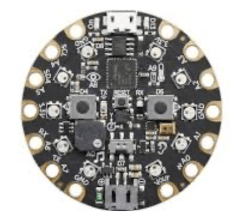
▲Figure 1. Image of the Circuit Playground Express
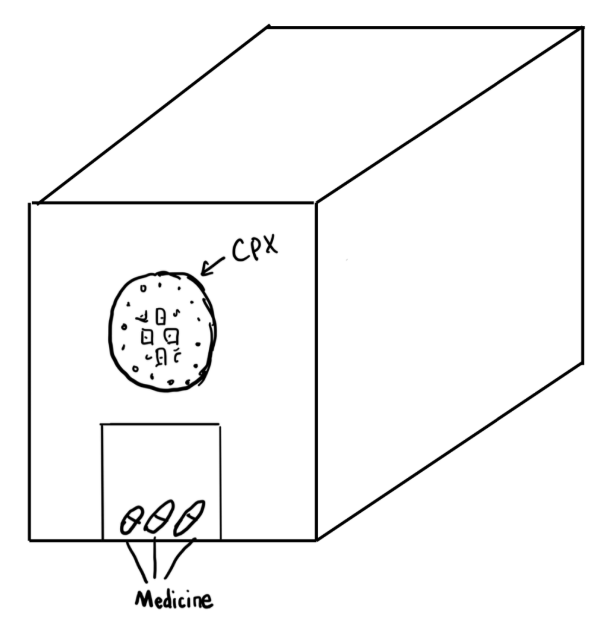
▲Figure 2. Image of the Medication-assisting device
In conclusion, effective medication-assisting devices for older adults need to be
simple, with personal reminders, physical adaptability, and versatility in meeting the unique
and varied needs of the demographic. These features guarantee ease of use, enhance
medication adherence, minimize possible errors, and even help the elderly feel empowered to
actively manage their health. The large buttons, intuitive interfaces, and generally simple
designs ensure that older individuals require minimal effort to operate such a device.
Personalized reminders based on the schedules and preferences of the individuals can easily
insert medication management into their daily routines. Besides, physical adjustability of
these devices—such as setting adjustments for people with lower levels of dexterity and
mobility—means that they remain usable by people with different physical abilities. In
addition, versatility is the ability to handle multiple medications and allows the features of
real-time monitoring, which reinforces their appeal. A solution like these devices offers a
tangible way to navigate an ever-growing problem: the nonadherence of older adults in taking
their medication as prescribed.
Works Cited Page
Gualtieri, L., Yang, N., Vijaykumar, S., & Risling, J. (2024). Improving Medication
Adherence Through Digital Health Interventions: A Systematic Review and Meta-analysis of
Randomized Controlled Trials.
https://pmc.ncbi.nlm.nih.gov/articles/PMC11350294/
World Health Organization, qtd. in Gualtieri, L., Yang, N., Vijaykumar, S., & Risling, J.
(2024). Improving Medication Adherence Through Digital Health Interventions: A
Systematic Review and Meta-analysis of Randomized Controlled Trials.
https://pmc.ncbi.nlm.nih.gov/articles/PMC4619779/
Patel, K., Brown, S., Johnson, A., & Wang, X. (2020). Designing Medication Adherence
Tools for Older Adults: Best Practices and User Preferences.
https://pubmed.ncbi.nlm.nih.gov/33258778/
Gualtieri, L., Yang, N., Vijaykumar, S., & Risling, J. (2024). Improving Medication
Adherence Through Digital Health Interventions: A Systematic Review and Meta-analysis of
Randomized Controlled Trials.
https://pubmed.ncbi.nlm.nih.gov/33258778/
Patel, K., Brown, S., Johnson, A., & Wang, X. (2020). Designing Medication Adherence
Tools for Older Adults: Best Practices and User Preferences.
https://pubmed.ncbi.nlm.nih.gov/33258778/
Editor-in-Chief: Joon Ko
jko1@gvcspa.org
Global Vision Christian School Broadfording
13535 Broadfording Church Rd, Hagerstown
Website Manager: Gyeongwoo Yuk
gyuk1@gvcspa.org
 BroadfordingScience